
Amazon PPC Nedir ve Neden Önemlidir?
Amazon PPC nedir, sistem nasıl çalışıyor ve bütçe nereye gidiyor? Temelinden başlıyoruz.
Amazon PPC veya tıklama başına ödeme sistemi, özellikle satıcıları daha fazla görünür hâle getirme olanağı sağlayan bir reklam modelidir. Reklam verenler reklama tıklama sonrasında ödeme yapar. Bu gerçekten bütçe dostu bir performans modelidir. Aynı konuyu Amazon İngiltere’de Gıda Takviyesi Satışı 2026 yazımız ayrıca ele alıyor.
Sponsored Products:
Bireysel ürünlerin arama sonuçlarında üst sıralarda çıkmasını sağlar
Sponsored Brands:
Marka adını ve marka logonuzu, yani marka bilinirliğinizi ilk sıralara taşır
Sponsored Display:
Kullanıcının alışveriş yolculuğunun herhangi farklı anlarında kullanıcıya reklamınızı göstermek gibi fırsatlar sunar
2. Kampanya Türlerine Göre Bütçe Planlaması
Stratejiye uygun bütçe dağılımı
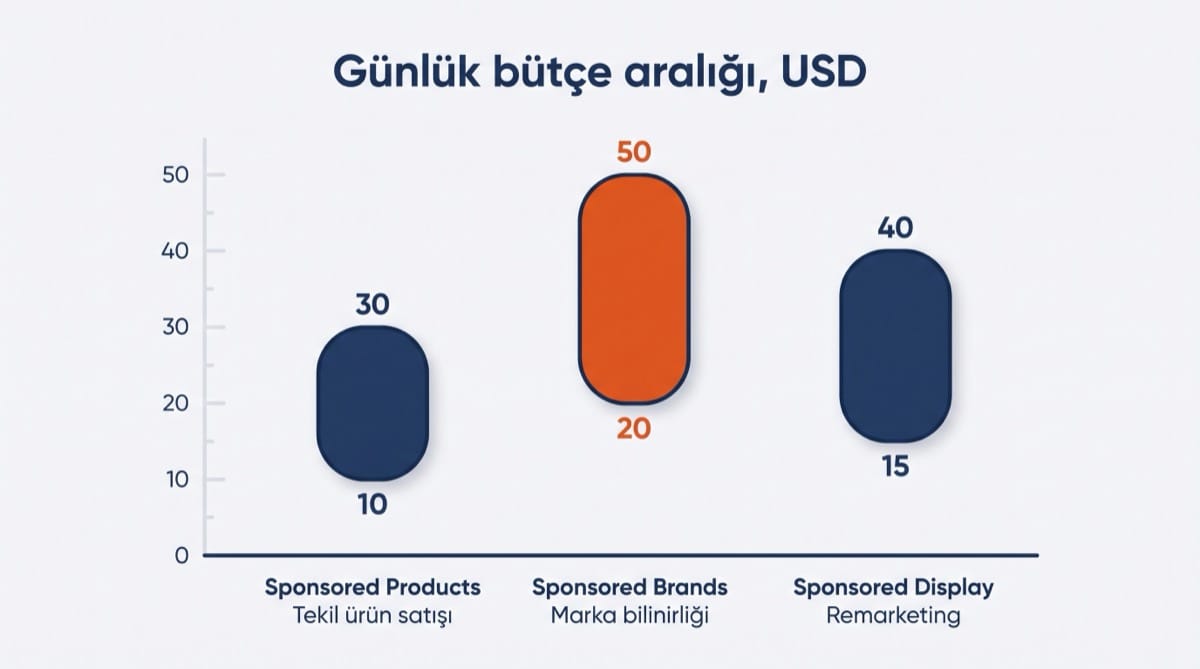
Kampanya oluştururken hedefe göre bütçe belirlemek gerekir. Aşağıdaki tabloda yaygın kampanya türleri ve önerilen günlük bütçeleri görebilirsiniz:
| Kampanya Türü | Hedef | Önerilen Bütçe (Günlük) |
| Sponsored Products | Bireysel ürün satışı | 10-30 USD |
| Sponsored Brands | Marka bilinirliği ve ürün çeşitliliği | 20-50 USD |
| Sponsored Display | Remarketing, çapraz satış | 15-40 USD |
Doğru kampanya türü, doğru dönüşüm
Her kampanya türü aynı dönüşümü sağlamaz. Örneğin, yeni ürün lansmanında Sponsored Products ile başlamak daha etkilidir. Marka büyütme aşamasındaysanız Sponsored Brands daha verimli olabilir.
Amazon PPC Neden bu kadar etkilidir?
Müşteriler zaten alışveriş yapmak amacıyla Amazon’a geldiğinden, Google ve Facebook gibi platformlar gibi etkileşim az olup dönüşüm çok yüksektir. Bu sebeple, Amazon PPC yalnızca “görünür olma” değil, doğru dönüşüm oranına doğru satış potansiyeli sunar. Amazon Private Label Başlangıç Rehberi yazımız bu başlığı bir adım öteye taşıyor.
Etkisi en fazla Ürün listelemelerinde ortaya çıkar
Optimize edilmemiş sayfa reklamınızın bütçesini çöpe atar
Çoğu satıcı bütçeden başka bir şey elde etmeye çalışırken sadece reklamın gerçekleştiğine odaklanırken, sayfanın kendisinin güçlendirilmesi söz konusu olduğunda, reklamınıza tıklayan müşteri orada satın alma yapmadığında önceden ödediğiniz tıklama başına ödeme dolandırılır.
Bu etkili yöntemleri daha çok öğrenmek ve e-ihracat danışmanlığı hizmeti satın almak için sektördeki en iyi firmalardan biri olarak bizimle çalışmanızı önemle tavsiye ederiz.
Listeleme entegrasyonu
Amazon PPC başarısı reklamınızda vaat ettiğiniz şeyi müşterinin ürün sayfasında bulmalıdır ve aksi durumda “yüksek tıklama-düşük dönüşüm” tuzağına düşebilirsiniz. Bu konuyu detaylandıran Amazon SPN nedir? Avantajları nelerdir? yazımıza da bakabilirsiniz.
Otomatik ve Manuel Kampanyaları Amazon PPC ile Akıllıca Kullan
Otomatik kampanya ile keşfedin
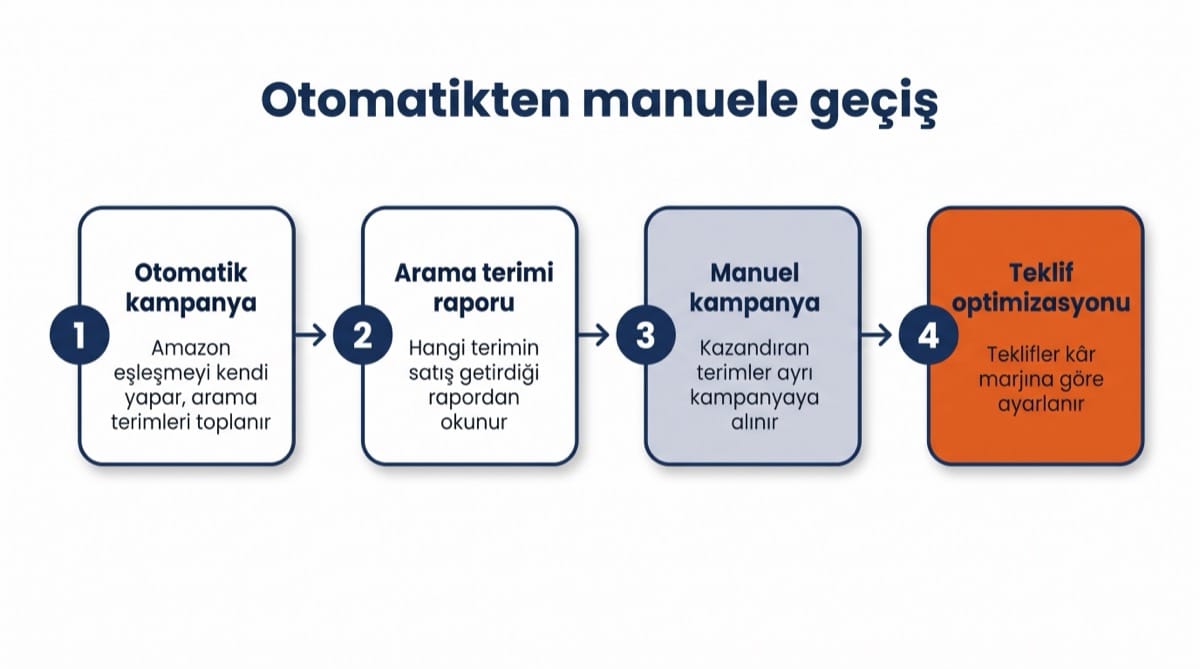
Yeni başlayanlar için otomatik kampanya kesinlikle hangi aramaların geliri artırdığını görmek için mükemmel bir beceridir. Amazon, hedef anahtar kelimelerle ilgili reklamları kendisi yönlendirir.
Otomatik kampanyaların Faydaları
Yeni ana [kelime] keşfi
Rakip tarafından bakılmayacak görünürlük
Zaman tasarrufu
Manuel kampanyaya geçme zamanı
Veriler toplandıktan sonra, yüksek performanslı terimler manuel kampanyaya alınır. Yukarıda belirtilen daha yüksek bir tıklama başı teklifle yatırım getirisi artar ve Amazon PPC aşamalı olarak optimize edilir.
Pazarı rakip analizi ile okuyun.
Rakipler analiz edilip stratejinizi ona göre belirleyin. Bu size ileriye dönük yaratacağınız en büyük fırsat olacaktır. Amazon PPC stratejinizde başarılı olmanın en temel prensiplerinden biri, bu sektörde başarı yakalayan rakiplerinize dikkatlice odaklanmaktır. Bu, kendi reklamlarınız için özgün fikirler edinmenizi ve onları daha da geliştirebilmenizi sağlayacaktır.
5. Reklam Performansını Ölçümlemek ve Yorumlamak
KPI’ları takip etmeden büyüme olmaz
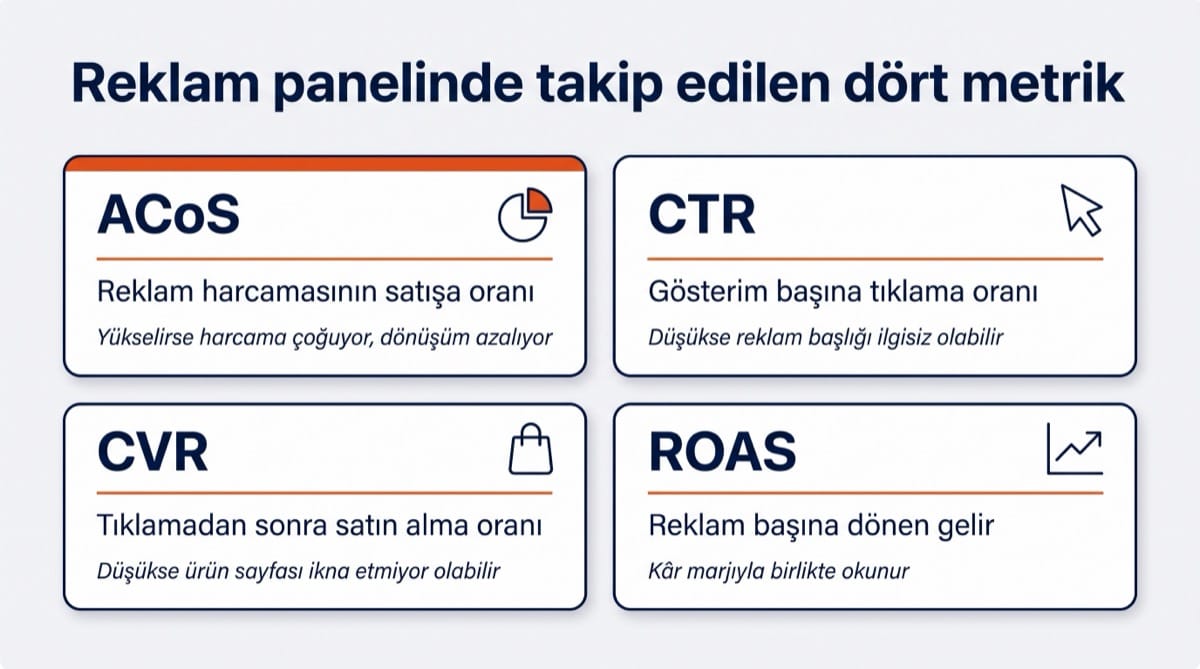
Reklamlarınızı “yayına aldım bitti” şeklinde düşünmek büyük hata olur. Aşağıdaki tablo, takip etmeniz gereken temel metrikleri gösteriyor:
| Metrik | Açıklama |
| ACoS | Reklam harcamasının satışa oranı |
| CTR | Gösterim başına tıklama oranı |
| CVR | Tıklamadan sonra satın alma oranı |
| ROAS | Reklam başına gelir |
Rakamları yorumlayabilmek kritik
Örneğin CTR düşükse, reklam başlığınız ilgisiz olabilir. CVR düşüklüğü, ürün sayfanızın ikna edici olmadığını gösterebilir. ACoS’un yükselmesi, reklamın fazla harcayıp az dönüşüm getirdiğini işaret eder. Bu verilerle aksiyon alırsanız Amazon PPC performansınız hızla yükselir.
Kullanılabilecek Amazon PPC araçları:
Amazon Reklam Paneli: Amazon, rakiplerinizin bazı kullandığı anahtar kelimelerin hangi olduğunuzu gösterebilir ve bazen hangi kelimelere daha fazla odaklanmanız gerektiğini kararlaştırmanızda yardımcı olabilir.
Third-party araçlar: Birçok fenomen Amazon PPC araçları geliştirilmiştir. Ancak, birkaç rakibin hangi ürünler için başarılı bir reklam oluşturduğunu veya hangi anahtar kelimelere odaklandıklarını görebilir.
Rakiplerinizin güçlü olduğu alanlarda strateji oluşturun.
Rakip analizi sonrasında, onlardan öğrendiklerinizi dikkate alarak stratejinizi onlara göre oluşturabilirsiniz. Örneğin; birkaç rakibin resimlerini veya açıklamarın onlara eksiklik varsa biraz daha iyi içerik okuyabilir ve buradan bir fırsat yarabilirsiniz. Aynı şekilde rakipler başarılı olduğu anahtar kelimeler hakkında bir şey yakalayarak tıklama ve satışlarınızı artırabilirsiniz.
Amazon PPC için Gelişmiş teklif stratejileri
Otomatik teklifler yerine manuel teklifler kullanmaya başlayın. Çoğu zaman reklamı başlatmak için otomatik teklifler kullanılır, ancak zaman içinde reklamı optimize etmek için manuel teklifler oluşturmanız gerekecektir. Manuel teklifler, teklif vermek için açmak istediğiniz maksimum tıklama fiyatına bağlı olarak işlem görürler.
Daha fazla kontrol, daha yüksek dönüşüm.
Her anahtar kelime için bütçe atadığınız yeni tekliflerle daha etkili bir şekilde yaptığınız için her anahtar kelimeye atandığınız dönüşüm ilişkisinden daha fazla yararlanacak ve daha yüksek ROI elde edebileceksiniz. Bu da Amazon PPC’yi şirketinize odaklı hale getiren önemli bir özelliktir.
Uzman görüşü olarak; Amazon PPC’nizi nasıl güçlendirirsiniz?
Amazon PPC’de yıllardır birçok farklı sektörde işletme için reklam stratejileri oluşturdum. İyi reklamın temelleri ve başarısı, doğru hedefleme ve sürekli analiz yapma kapasitesidir. Müşteri projelerimde kullandığım ana ilkeler aşağıda anlattık ayrıca bu e-ihracat modellerini global olarak sergilediğimiz websitemizde sizleri görmek isteriz
Doğru hedef kitleyi tanımak.
Her ürün, reklam için belirli hedef kitlelere hitap eder. Doğru kişilere doğru zamanda ulaşmak sadece kampanya hedeflerinizi başarmakla kalmayacak, aynı zamanda verimliliğinizi de artıracaktır.
Sürekli iyileştirme:Reklamlarınızı sürekli olarak izleyerek ve optimize ederek, yüksek bazda performans elde edebilirsiniz.
Veriye dayalı kararlar almak. Hatırlanan bir iyi tasarımın da bir stratejiye ihtiyacı vardır. Geçmiş kampanyalar için verileri analiz ederek, yaşam ve ölüm arasındaki ince çizgide doğru adımları atabilirsiniz.
Sonuç Değerlendirmeleri ve Kullanıcı Kılavuzları:
Mevcut reklam stratejinizi daha iyi hale getirin. Sonuç olarak, etkin Amazon PPC kampanyaları yapmak için mevcut stratejilerinizi düzenli olarak kontrol etmeli ve optimize etmelisiniz. Kampanyalarınızı analiz edin, hedef kitleniz için doğru anahtar kelimeleri kullandığınızdan emin olun ve bütçenizi dikkatlice yönetin. Success Amazon PPC, tıklama başına değer kodu olan reklama dayalı bir gelir modelidir. Algılayıcı bir reklam verisi klipi yoksa, kullanıcıya hiçbir kuruş ödenmez.
Sıkça Sorulan Sorular
- Amazon PPC nedir?
Amazon PPC, tıklama başına ödeme yapılan bir reklam modelidir. Satıcılar yalnızca bir müşteri reklama tıkladığında ödeme yapar. - Amazon PPC kampanyaları ne kadar sürede sonuç verir?
Kampanya türüne ve hedeflerinize bağlı olarak değişir, ancak genellikle 1-2 hafta içinde performans gözlemlenebilir. - Reklam bütçesini nasıl ayarlamalıyım?
Başlangıçta düşük bir bütçeyle başlayabilir ve verileri analiz ettikçe bütçenizi artırabilirsiniz. - Kampanya türlerinden hangisini seçmeliyim?
Hedefinize göre kampanya türlerini seçmelisiniz. Yeni ürünler için Sponsored Products idealken, marka bilinirliği için Sponsored Brands daha uygundur. - Reklam kampanyaları neden verimsiz olabilir?
Zayıf ürün listelemeleri, yanlış hedefleme veya düşük teklifler verimsiz sonuçlar doğurabilir. - Amazon PPC’de teklif nasıl yapılır?
Tekliflerinizi manuel veya otomatik olarak ayarlayabilirsiniz. Manuel teklifler, her anahtar kelime için maksimum tıklama fiyatını belirlemenizi sağlar. - Rakip analizi yapmak ne kadar önemlidir?
Rakiplerin reklam stratejilerini incelemek, güçlü noktalarınızı ve fırsatları keşfetmenize yardımcı olur. - Kampanyalar ne kadar süreyle aktif kalmalı?
Reklamlarınızı sürekli izleyip optimize etmek önemlidir. Sezonluk kampanyalar için süreyi kısa tutabilir, ancak sürekli kampanyalar için süreyi uzun tutmak gerekebilir. - Amazon PPC ile satış nasıl artırılır?
Doğru hedefleme, iyi optimize edilmiş ürün sayfaları ve yüksek tekliflerle satışlarınızı artırabilirsiniz. - Amazon PPC’de başarısızlık nedenleri nelerdir?
Yetersiz bütçe yönetimi, kötü anahtar kelime seçimi ve zayıf ürün sayfası tasarımları yaygın başarısızlık nedenleridir.

