
Most manufacturers looking for a beginner’s guide to Amazon Private Label are actually wondering just one thing: when will the first batch go on sale, and what costs will accumulate until then? Selling under your own brand on Amazon —that is, through private label—is a process that starts with finding products but continues with decisions about the company, the brand, and inventory.
This article doesn’t cover the entire process, but rather the first 90 days —that is, the period from the day you make your initial decision to the first launch. If you’d like to see the full process step by step, from choosing a category to creating A+ content, our article on Amazon FBA private label sales covers that in detail.
The schedule below is not a rule, but a sequence commonly seen in the field. It can vary depending on the product group, manufacturer, and season. The goal is not to stick to specific dates, but to see which decision holds up which other decision.
Amazon Private Label Starter Guide: What the First 90 Days Look Like
Dividing the first 90 days into three blocks works well. Each block includes a decision and an outcome.
| Period | Main decision | What will you end up with? |
|---|---|---|
| Days 1–30 | What will you sell, and how will you stand out? | Product decisions, list of manufacturers, company and account infrastructure |
| Days 30–60 | How many, at what cost? | Approved sample, initial batch quantity, cost breakdown |
| Days 60–90 | What will you look like? | Listing, visuals, launch, and advertising plan |
These three steps are interdependent. Brand Registry cannot be activated until the brand awareness requirement is met, and without Brand Registry, A+ content and certain ad formats cannot be used. Disrupting the sequence often results in a loss of time.
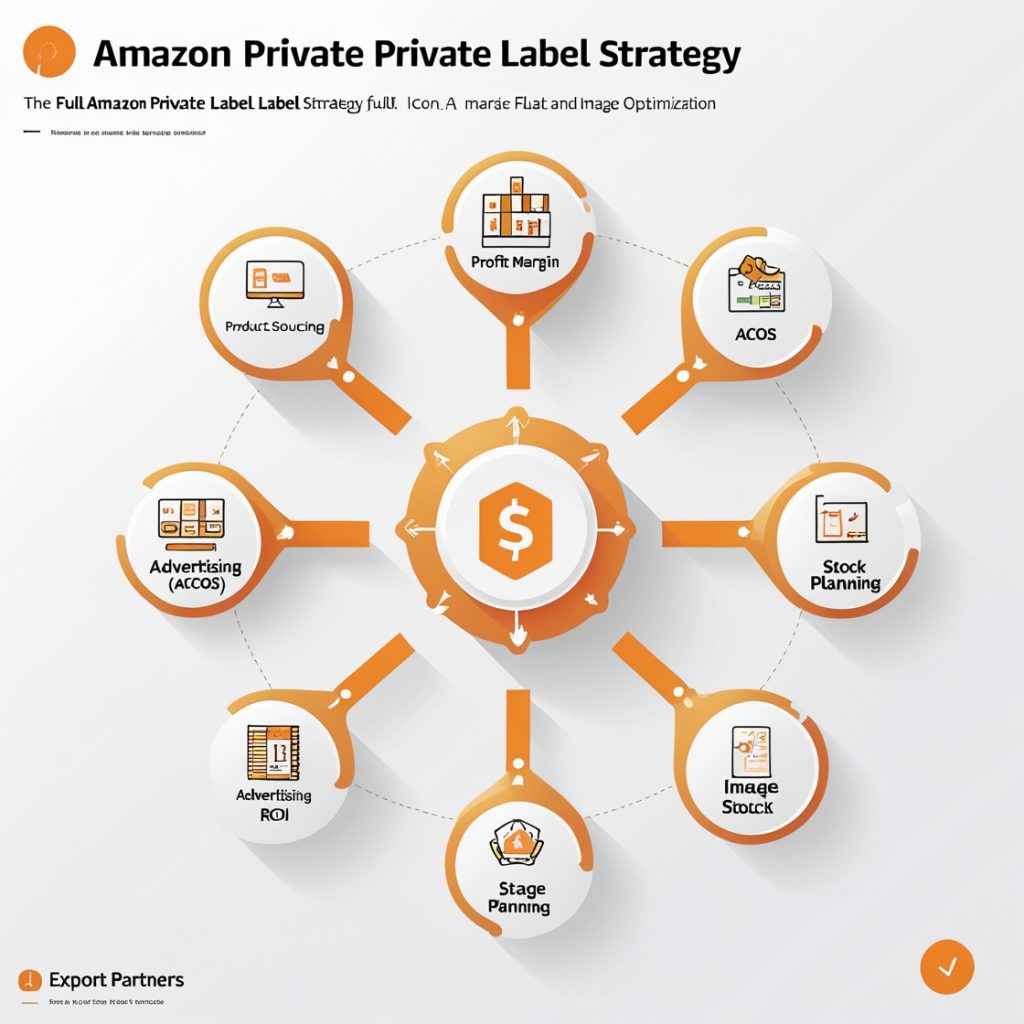
The first 30 days: product selection and differentiation decisions
Selling a product on Amazon that anyone can easily source leads to price competition. This translates to low profits, high advertising costs, and a business model that’s hard to sustain. The main task during the first 30 days is to decide where your competitive edge will lie.
There are four practical ways to differentiate yourself:
- Technical difference: more durable material, a more functional design feature, a different cap, or a different dosage form
- Visual distinction: packaging design, color, shelf appeal
- Target audience difference: a version of the same product tailored to a specific user group
- Set difference: offering two or three items used together as a set rather than as a single product
A differentiated product generally achieves higher conversion rates with less advertising and can be sold at a higher price. This directly affects the cost table in the second block.
At this stage, reading the reviews on competitors’ listings is the most cost-effective way to see which shortcomings are most frequently complained about. For one home textiles manufacturer we analyzed, the idea for differentiation emerged from a single, recurring complaint about sizing found in the reviews on competitors’ listings.
First 30 days: company, brand awareness, and account infrastructure
The second track—infrastructure—runs parallel to the product decision. Any delay on this track directly delays the launch, since most of the subsequent steps depend on it.
- U.S. company and tax ID number. Forming an LLC and obtaining an EIN are prerequisites for setting up a seller account and opening a bank account. For a breakdown of costs, please see our article on the cost of forming an LLC in the U.S.
- Brand awareness. A USPTO application is a prerequisite for the Brand Registry. Since the process from application to registration can take a long time, it makes sense to start early. For more details, see our article on Amazon Brand Registry and trademark registration.
- Seller account. Professional account, document verification, and category approval (if applicable)
- Product-specific compliance. A separate track for food, dietary supplements, cosmetics, and animal products under the FDA. If you need assistance with this process, please check out our FDA registration and certification services.
All four can be started at the same time. If done one after another, the first 30 days can easily turn into 60 days.
Days 30–60: Sample, production, and initial lot size
The sample stage is the first step that shows whether the product decision is truly sound. Rushing this step affects every subsequent step, because packaging printed without approval compromises the entire batch.
There are two opposing pressures regarding initial order size. Low inventory reduces visibility and can negatively impact search rankings. Excess inventory, on the other hand, ties up cash. The typical starting range in the field ranges from 100 to 300 units, but this number varies significantly depending on the product’s unit cost and volume.
When making a decision about the first batch, you also need to factor in when the money will come back. We broke down how this cycle works day by day in our article on Amazon FBA cash flow.
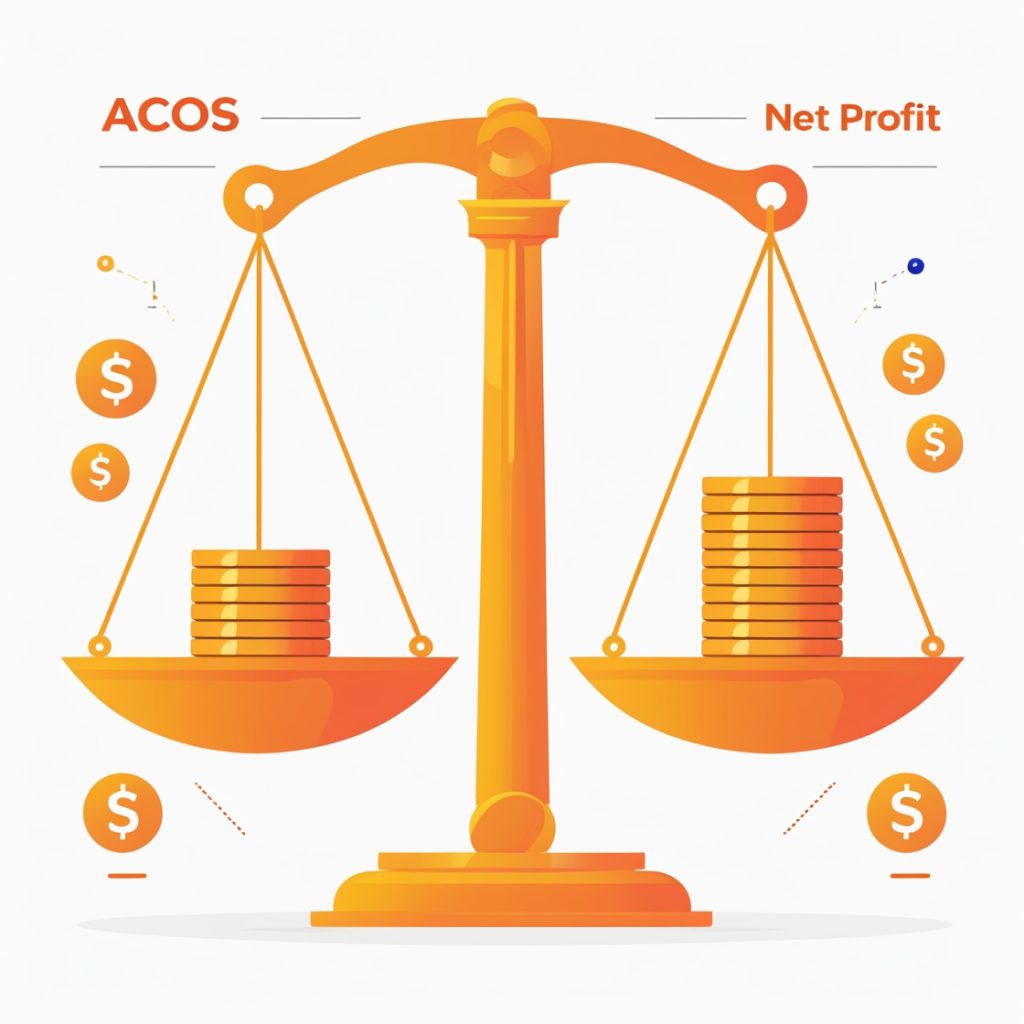
Days 30–60: Net Profit Margin, ACoS, and ROI
These three figures can be misleading if not considered together. Let’s use the same product as an example for all three.
The net profit margin is the actual profit you make per product sold. It’s the amount remaining after subtracting the product cost, Amazon commissions, shipping, and other expenses from the selling price.
| Product purchase price | 5 USD |
| Amazon commission | 3 USD |
| Shipping and other expenses | 1 USD |
| Total cost | 9 USD |
| Selling price | 12 USD |
| Net income | 3 USD |
| Profit margin | %25 |
ACoS (Advertising Cost of Sales) is the ratio of advertising spend to sales generated by those ads. If $30 in advertising spend generates $100 in sales, the ACoS is 30%.
Here’s the key point: if your net profit margin is 25% but your ACoS is 30%, those ads aren’t generating a profit. Ideally, your ACoS should remain below your net profit margin. Temporarily exceeding it during the launch period can be a deliberate choice, but there needs to be an end date for this. You can find the details on bid calculations in our article on Amazon PPC ad management.
ROI, on the other hand, shows how much you earn relative to your total investment. An investment of 900 USD and a net profit of 300 USD equates to a 33% ROI. In other words, every 1 dollar invested yields 33 cents in profit. ROI is a metric measured on a per-batch basis, while margin is measured on a per-product basis. It’s important not to confuse the two.
Days 60–90: Listing, images, and launch
The first thing a customer looks at during the decision-making process is the product photo. The description takes a back seat. When the visual set includes these four elements, conversion rates can increase significantly:
- High-resolution main image on a white background
- At least one frame showing the product in use
- An infographic explaining measurements, ingredients, or usage steps
- A comparison image that directly highlights the key differentiator
When it comes to product launches, working within a reasonable budget yields better results than starting aggressively and running out of inventory too soon. For advertising to be effective, you need to have sufficient inventory; if your inventory runs out while the ad campaign is running, you won’t recoup the budget you’ve spent. For details on your launch plan, check out our Amazon launch and advertising services.
The three most common mistakes in the first 90 days
- Save the branding for last. If the USPTO application is filed late, Brand Registry, A+ content, and certain ad formats will be delayed until after the launch.
- Work backward from the selling price to determine the cost structure. Setting a target price first and then trying to fit the costs within that range often leaves the margin below the advertising budget.
- Expanding the first batch without taking the cash flow cycle into account. As the batch grows, the payback period also lengthens, and there may not be enough resources left for the second batch
Frequently Asked Questions
What is an Amazon private label?
Selling a product you had a manufacturer produce under your own brand name on Amazon. The product is listed under your brand, and you are the owner of the listing. The difference from a franchise is that you determine the listing and brand positioning.
What is a private label, and is there a difference between it and my own production?
If you’re manufacturing at your own facility, you’re essentially already doing private label—the only difference is where production takes place. The steps on the Amazon side—namely, brand awareness, listing, and launch—are the same for both.
What is the cost difference between private label and dropshipping?
With private label, you have to pay upfront for production, samples, branding, and the first batch. With dropshipping, the upfront investment is low, but since you don’t own the listing or the brand, you’re more vulnerable to price competition. The cost of private label is high, but the value it generates stays with you.
What is Amazon PPC, and is it required for a product launch?
PPC is an advertising model where you pay per click. It’s not mandatory, but it’s not realistic to expect a new listing to be discovered on its own. It’s considered normal for ACoS to temporarily exceed the margin during the launch phase; what’s important is knowing from the start when this will end.
What is SPN, and is it useful in the private label process?
SPN is a network of service providers approved by Amazon. If the party you’ll be working with—whether for account setup, product listings, or compliance—is part of this network, it can make it easier to communicate with Amazon if any issues arise. For more details, see our article “What Is Amazon SPN?”
Conclusion
Here’s a summary of the Amazon Private Label starter guide: The first 90 days aren’t about finding products—they’re about making four decisions in the right order: what to sell, which platform to use, how many units to start with, and what margin to set.
It is possible to address these four issues separately, but if the sequence between them is disrupted, the timeline extends and costs increase. If you’d like to set up the process together, please check out our Amazon consulting services.

