
ABD’ye İçecek İhracatı: FDA Kaydı, DUNS ve Etiket İncelemesi, Baştan Sona
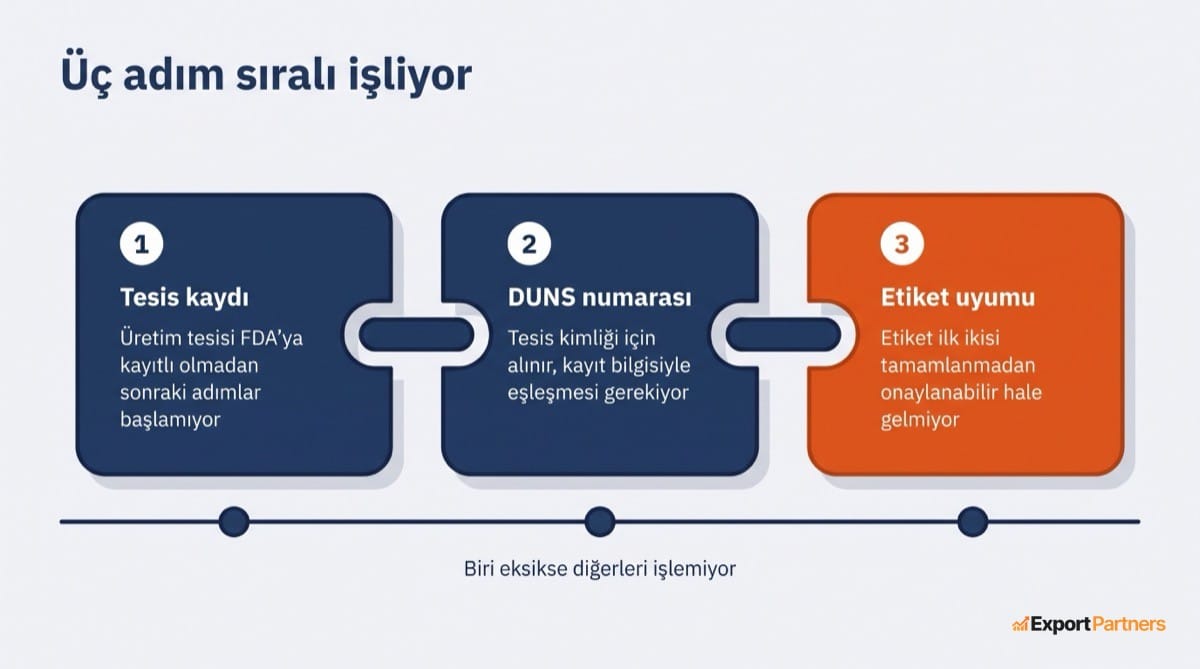
ABD’ye içecek ihracatı planlayan Türk üreticilerin çoğu, süreci üç ana kalem üzerinden düşünüyor: FDA gıda tesisi kaydı, DUNS numarası ve etiket uyumu. Ürün kalitesi ne kadar iyi olursa olsun; bu üç katman baştan doğru kurulmadığında ürün ABD sınırından geçemiyor, gümrükte alıkonuyor veya sonradan pahalıya mal olan revizyonlarla ilerleniyor.
Bu yazıda, danışmanlığını yürüttüğümüz bir Türk içecek üreticisinin FDA giriş sürecinden yola çıkarak; kayıt, DUNS ve etiket inceleme adımlarını uygulamada nasıl yönettiğimizi anlatıyoruz. Amaç, hem süreci ilk kez öğrenen üretici için net bir yol haritası çıkarmak, hem de aynı yolu düşünen firmaların baştan doğru karar verebilmesini sağlamak.
3. Etiket ve İçerik Uyum İncelemesi
FDA kaydı ürünün ABD’ye “girebilir” olmasını sağlar; ama gümrükte sorunsuz geçmesi ve rafta kalmasının bir sonraki şartı etiketin FDA kurallarına uygunluğudur. İçecek kategorisinde etiket incelemesi standart gıdadan daha katmanlıdır çünkü meyve suyuna özgü ek kurallar devrededir.
Etiket İncelemesi Neyi Kapsıyor?
- Statement of Identity: Ürünün adı ve tanımı; “juice”, “nectar”, “juice drink” gibi terimlerin doğru kullanımı.
- Net miktar beyanı: Hem metrik hem ABD birimi (fl oz); konum, yazı büyüklüğü ve format tanımlı.
- Nutrition Facts: Güncel ABD formatı; içecekte özellikle ‘added sugars’ satırı ve porsiyon büyüklüğü hesabı önemlidir.
- İçerik listesi ve alerjen: Ağırlık sırasına göre; sülfit gibi alerjenler beyan edilir.
- Yüzde meyve suyu beyanı (21 CFR 101.30): İçinde meyve suyu bulunan tüm içeceklerde zorunlu; Brix üzerinden hesaplanır.
- Pastörizasyon uyarısı (21 CFR 101.17(g)): İşlenmemiş meyve sularında zorunlu uyarı ifadesi; formatı tanımlı.
- Üretici bilgisi ve menşe: ‘Product of Türkiye’ beyanı; üretici/dağıtıcı adı ve adresi.
- Dil: Etiketin tamamı İngilizce olmalı.
İncelemede En Sık Karşılaştığımız Revizyonlar
Vakamızdaki çoklu ürün incelemesinde en çok gündeme gelen düzeltmeler şu üç noktada yoğunlaştı:
- Yanlış yüzde beyanı: Konsantreden üretilen ürünlerde Brix hesabı ile ulaşılan gerçek oran, etikette yazan oranla çoğu zaman farklı çıkıyor.
- Ürün adının kategori uyumsuzluğu: Türkçede “nektar” olarak satılan ürün, ABD’de gerçek meyve suyu oranına göre farklı bir kategoriye giriyor; ürün adı da buna göre revize ediliyor.
- Eski Nutrition Facts formatı: Güncel ABD formatı ‘added sugars’ satırı içeriyor; eski format kabul edilmiyor.
İnceleme SKU bazında yapılır; her ürün için ayrı bir uyum raporu hazırlanır ve gerekli revizyon yönlendirmeleri müşteriye sunulur. Bu rapor sonradan gümrükte, alıcı görüşmelerinde ve Amazon dahil pazaryerlerinde tekrar tekrar kullanılan bir belge haline geliyor. Etiket tarafının bütünü için FDA Etiket ve Gümrük Danışmanlığı Rehberimiz yol gösterici olacaktır.
Kayıt ve Etiket Tamamlandıktan Sonra
Üç kalemin tamamlanmasıyla üretici, ABD’ye ihracat için resmi olarak “hazır” durumdadır; ancak sürecin tamamı bu üç adımdan ibaret değil. Sonraki aşamada gündeme gelen ek başlıklar şunlar:
- Prior Notice: Her sevkiyat öncesi FDA ve CBP’ye elektronik ön bildirim.
- İthalatçı kaydı ve customs bond: Sevkiyatın gümrükten geçebilmesinin operasyonel altyapısı.
- FSVP: ABD gıda ithalatında ithalatçı tarafın bir tedarikçi doğrulama planı bulundurması beklenir; bu yükümlülük üreticiye değil ithalatçıya aittir.
- Marka tescili ve Brand Registry: Amazon veya perakendede satış planlanıyorsa marka bilinirliği için kritik.
- Amazon ve e-ticaret kurulumu: Regülasyon temeli hazır olduğunda, satış tarafının inşası çok daha hızlı ilerliyor.
Yol Haritası, Tek Bakışta
| Aşama | Ne Yapılıyor | Neden Önemli |
| 1. DUNS | D&B başvurusu ve numaranın alınması | FDA kaydının teknik ön koşulu |
| 2. FDA kaydı | Foreign Facility Registration + US Agent | ABD’ye girişin ön şartı |
| 3. Etiket incelemesi | SKU bazında uyum analizi ve raporlama | Gümrük ve raf tarafının ortak dili |
| 4. Sevkiyat | Prior Notice + customs bond + gümrük | Her sevkiyatta tekrar eden operasyon |
| 5. Satış altyapısı | Marka, Amazon, distribütör kanalları | Regülasyonun üzerine inşa |
Sıkça Sorulan Sorular (SSS)
FDA kaydı için önce DUNS mu almalıyım?
Evet. FDA sistemine yabancı gıda tesisi olarak kayıt açabilmek için önce D&B üzerinden DUNS numarasının alınması gerekir. Sıra bozulduğunda kayıt sistem tarafından reddedilir.
US Agent’ı üretici kendisi seçebilir mi?
Evet. US Agent’ın ABD’de yerleşik olması yeterlidir; hizmet sağlayıcı bir kurum veya bireysel bir kişi olabilir. Kurumsal US Agent hizmetinin süreklilik ve yazışma takibi açısından avantajı bulunuyor. Temsilcinin teyit adımı ve değişiklik bildiriminin nasıl işlediğini FDA ABD temsilcisi rehberimizde ayrıntılı anlattık.
FDA kaydı ne kadar sürede sonuçlanır?
Belgeler eksiksiz ve US Agent onayı hızlı alınırsa birkaç gün içinde. Eksik veya tutarsız bilgiler süreci uzatan başlıca sebeptir.
FDA kayıt numarası markete gösterilir mi?
Hayır. FDA kayıt numarası bir onay veya kalite belgesi değildir; ürünün üzerine yazılmaz. Pazarlama iletişiminde “FDA kayıtlı” ifadesi kullanılabilir, ancak “FDA onaylı” ifadesi yanıltıcıdır.
Etiket revizyonlarını sonradan yapabilir miyiz?
Yapılabilir ancak baskı ve ambalaj maliyeti ortaya çıkar. Deneyimimiz gösteriyor ki etiket incelemesinin baskı öncesi tamamlanması, en ekonomik yoldur.
FDA kaydı iki yılda bir mi yenileniyor?
Evet. Kayıt çift sayılı yılların Ekim-Aralık aralığında yenilenir; süresi geçen kayıt otomatik olarak iptal olur ve ürün ABD’ye giremez.
Üç Kalem, Tek Bütünlük
ABD’ye içecek ihracatının kaderi, uygulamada çoğu zaman bu üç kalemin birlikte kurulup kurulmadığında belirleniyor. DUNS, FDA kaydı ve etiket incelemesi ayrı ayrı görüldüğünde küçük operasyonel adımlar gibi durur; birlikte doğru sırayla ele alındığında ise ABD pazarına giriş için sağlam ve öngörülebilir bir temel oluştururlar.
Türkiye’den ABD’ye içecek ve gıda ihracatında FDA kaydı, DUNS ve etiket uyum süreçlerini uçtan uca yürütüyoruz. Ek olarak gümrük ve ithalat operasyonları, ABD’de vergi ve muhasebe, marka tescili tarafını da aynı çatı altında koordine ediyoruz. Talebiniz olduğunda Amazon ve e-ticaret kurulumlarınızı da bu regülasyon altyapısının üzerine inşa edebiliyoruz.
İlgili rehberler: FDA kayıt ve belgelendirme · FDA Etiket ve Gümrük Danışmanlığı Rehberi · Amerika’da marka tescili · Amazon Brand Registry
Bu dizideki diğer rehberler
Bu rehber, ABD’ye ihracatta FDA süreçlerini anlatan bir dizinin parçası. Konuya yakın diğer rehberler:
- Abd’ye meyve suyu ihracatında fda kaydı ve etiket
- Bitkisel yağ ihracatında fda kaydı, gmp ve gümrük
- Kolajen ve protein tozu satışında fda ve etiket süreci
- Kayıt ve belgelendirme tarafında destek için FDA kayıt ve belgelendirme hizmetimize bakabilirsiniz.

