Amerika’ya kolajen ve protein tozu satışı, ABD spor beslenmesi ve takviye gıda pazarında Türk üreticileri için son yılların en dikkat çeken ihracat alanlarından biri. Protein tozu, meal replacement ve kolajen ürünleri, hem perakende hem Amazon tarafında güçlü ve istikrarlı bir talep görüyor. Türkiye’nin süt ve et işleme altyapısı ile fason üretim kapasitesi de bu kategoride ciddi bir maliyet ve kalite avantajı sunuyor.
Ancak bu ürün grubu, ABD’ye giriş açısından sıradan bir gıdadan daha katmanlı bir yapıya sahip. İki ayrı sebepten: birincisi ürünlerin büyük bölümünün “dietary supplement” kategorisine girmesi, ikincisi kolajen gibi hayvansal kaynaklı içeriklerin FDA’nın yanı sıra USDA tarafını da gündeme getirebilmesi. Bu iki başlık doğru kurgulanmadığında, ürün kalitesinden bağımsız olarak sevkiyat ve listeleme tarafında aksamalar yaşanabiliyor.
Bu rehberde, danışmanlığını yürüttüğümüz projeler üzerinden kolajen ve protein tozu ürünlerinin ABD pazarına giriş sürecini adım adım ele alıyoruz.
ABD Takviye Gıda Pazarı Neden Bu Kadar Cazip?
ABD, kişi başına takviye gıda harcamasında dünyanın önde gelen pazarı. Kolajen tarafında güzellik ve eklem sağlığı konumlandırması, protein tozu tarafında ise performans ve günlük beslenme konumlandırması ayrı ayrı büyüyen segmentler oluşturuyor. Meal replacement kategorisi de pratik beslenme alışkanlıklarının yaygınlaşmasıyla birlikte genişlemeye devam ediyor.
Amazon bu talebin önemli bir kısmını topluyor. Doğru etiket, doğru claim yapısı ve doğru lansman kurgusuyla, Türkiye’de üretilen bir ürünün ABD’de raf bulması mümkün. Yeter ki regülasyon tarafı ürün piyasaya çıkmadan önce kurulmuş olsun.
Kolajen ve Protein Tozunu Diğer Gıdalardan Ayıran İki Nokta
Dietary Supplement Kategorisi
ABD’de bir ürünün etiketinde “dietary supplement” ifadesi yer alıyorsa, ürün konvansiyonel gıdadan farklı bir çerçeveye tabi olur. Nutrition Facts yerine Supplement Facts paneli gerekir, içerik beyanı farklı formatta hazırlanır ve ürünün üzerindeki iddialar için ayrı bir değerlendirme yapılır.
Bazı ürünlerde bu ifadeyi etikete hiç koymamak, ürünü daha hafif bir rejimde tutabildiği için daha mantıklı olabiliyor. Bu karar formülasyona, hedef segmente ve iddialara göre değişiyor; o yüzden etiket tasarımı kesinleşmeden önce verilmesi gereken bir karar.
Hayvansal Kaynaklı İçerik
Kolajen peptidi sığır veya balık kaynaklı olabiliyor. Protein tozlarında ise whey ve kazein gibi süt türevleri, bazı formülasyonlarda yumurta türevleri bulunuyor. Hayvansal orijinli bu içerikler, ABD’ye girişte FDA’nın yanı sıra USDA tarafını da devreye sokabiliyor. Bu, kategoriyi bitkisel bazlı bir takviyeden ayıran en kritik fark.
Adım 1: ABD Şirketi ve Vergi Numarası (LLC + EIN)
Amazon ABD’de profesyonel satıcı olmanın ve ithalatçı sıfatıyla hareket etmenin temeli, bir ABD tüzel kişiliği ve EIN vergi numarasıdır. Teknik olarak ABD şirketi olmadan da satış mümkün; ancak banka hesabı, marka başvurusu, gümrük kaydı ve ödeme tahsilatı açısından LLC + EIN yapısı süreci belirgin şekilde kolaylaştırıyor.
Adım 2: FDA Gıda Tesisi Kaydı, US Agent ve DUNS
Ürünü üreten Türkiye’deki tesisin FDA’ya kayıtlı olması ve bir ABD Temsilcisi (US Agent) ataması gerekiyor. Kayıt iki yıllık periyotlarla yenileniyor. Tesis kimliği için ayrıca DUNS numarası alınıyor.
Her sevkiyat öncesinde FDA ve gümrüğe elektronik ön bildirim (prior notice) yapılması, ABD’deki ithalatçının ise tedarikçi uygunluğunu doğrulayan bir FSVP planına sahip olması gerekiyor. Bu üç başlık, ürünün ABD’ye giriş kapısını oluşturuyor.
FDA tarafının pratik adımları için: FDA Kayıt ve Belgelendirme rehberimiz · FDA Etiket ve Gümrük Danışmanlığı Rehberi
Adım 3: Etiket ve Formülasyon Uyum Denetimi
Bu kategoride etiket, sürecin en belirleyici kalemi. Denetim ürün grubu bazında yapılıyor ve şu başlıkları kapsıyor:
- Formülasyonun FDA çerçevesinde değerlendirilmesi, içeriklerin onaylı katkı, GRAS ya da kabul edilebilir statüde olup olmadığı
- Supplement Facts panelinin ABD formatına uygunluğu, porsiyon ve günlük değer hesapları
- İçerik listesi ve alerjen beyanı (süt, yumurta, soya, balık gibi majör alerjenler)
- Structure/function claim analizi, yani ürünün üzerinde hangi ifadelerin kullanılabileceği
- Net miktar, üretici/dağıtıcı bilgisi, parti ve son kullanma tarihi gibi zorunlu etiket unsurları
Etiketin tamamı İngilizce olmalı. Ürünün hastalık tedavi ettiğine veya önlediğine dair ifadeler kullanılamıyor; bu tür iddialar hem regülatif hem Amazon tarafında sorun yaratabiliyor.
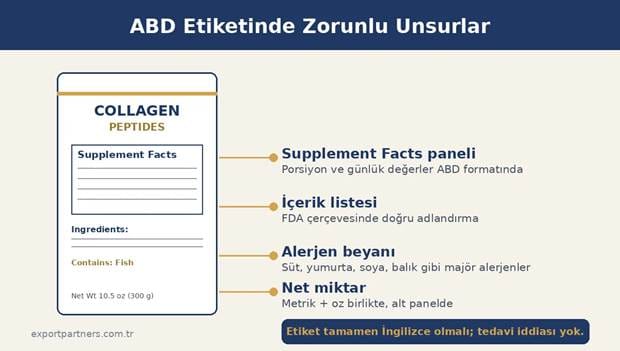
ABD etiketinde zorunlu unsurlar (dosya: supplement-facts-etiket-unsurlari.webp · alt metin: ABD Supplement Facts etiketinde bulunması gereken zorunlu unsurlar)
Adım 4: Hayvansal İçerik ve USDA APHIS VS İzni
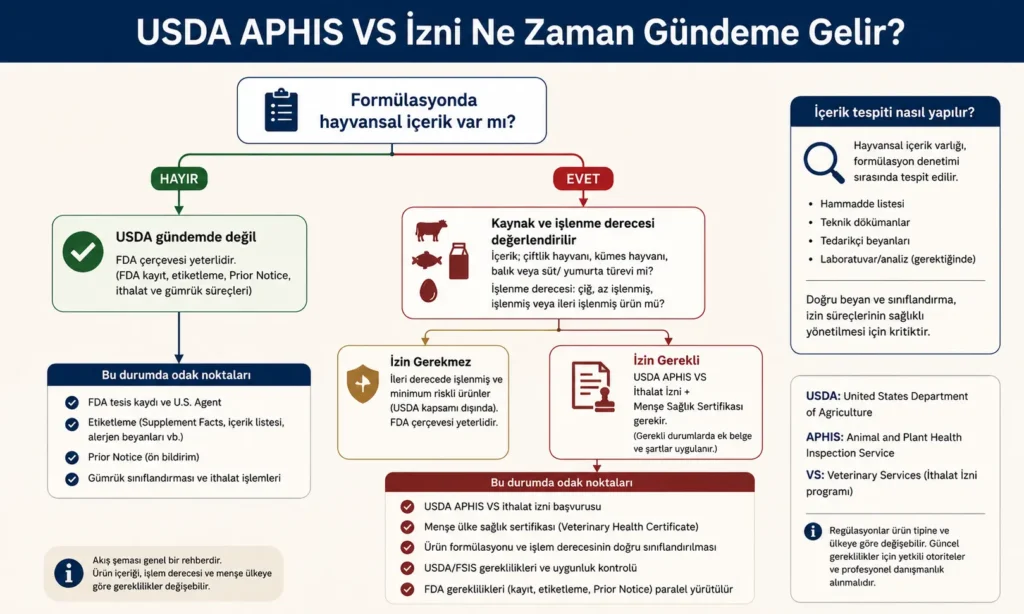
Bu başlık, kolajen ve süt bazlı protein ürünlerini kategorideki diğer takviyelerden ayıran nokta. Hayvansal orijinli içerik taşıyan ürünlerde, yabancı hayvan hastalıklarının girişini önleme amacıyla USDA APHIS Veteriner Servisi (VS) ithalat izni gündeme gelebiliyor.
İznin gerekli olup olmadığı, formülasyondaki hayvansal türevin kaynağına, işlenme derecesine ve menşe ülkeye göre değişiyor. Bu nedenle formülasyon incelemesi sırasında içerik tespiti yapılması, sürecin doğru planlanması açısından önemli. Menşe ülkeden sağlık sertifikası talep edilen durumlar da olabiliyor.
Pratik yaklaşım şu: etiket ve formülasyon denetimi sırasında hayvansal içerik netleştirilir, ardından USDA tarafının gerekip gerekmediği kesinleştirilir. Bu sıralama, sevkiyat aşamasında sürpriz yaşanmasını önlüyor.
Adım 5: Gümrük Kaydı ve Customs Bond
ABD’ye ticari sevkiyat yapabilmek için ithalatçı kaydının kurulması ve yıllık customs bond düzenlenmesi gerekiyor. Bu iki kalem, sevkiyatların gümrükten sağlıklı geçişinin operasyonel altyapısını oluşturuyor ve genelde ilk sevkiyat planlanmaya başladığında devreye alınıyor.
Adım 6: Amazon Gated Kategori Onayı ve Lansman
Takviye gıda, Amazon ABD’de onaya tabi (gated) bir kategori. Onay almadan bu ürünleri FBA depolarına göndermek veya listelemek mümkün değil. Onay başvurusunda genellikle şunlar isteniyor:
- Son 180 gün içinde tarihli, yetkili tedarikçiden alınmış, belirli adette ürün alımını gösteren faturalar
- Ambalajın tüm yüzlerini ve Supplement Facts paneli gibi zorunlu alanları net gösteren ürün fotoğrafları
- Ürün tipine göre FDA uyum belgeleri
- Bazı durumlarda laboratuvar analiz sertifikası (COA)
Onay alındıktan sonra listing hazırlığı, A+ içerik, Storefront kurulumu, FBA sevkiyat planlaması ve PPC kurulumu devreye giriyor. Lansmanın ilk sosyal kanıt aşamasına ulaşması, kurulum sürecinin tamamlandığı nokta olarak kabul ediliyor.
Amazon tarafı için: Amazon ABD’de Takviye Gıda Satışı ve FDA Uyum Süreci · Amazon Private Label Başlangıç Rehberi
İki Bileşenli Çalışma Modeli
Bu kategoride regülasyon ve satış tarafını ayrı ayrı yürütmek çoğu zaman verimli olmuyor. Etikette verilen bir karar Amazon listing’ini, listing’de kurgulanan bir konumlandırma ise etiketteki claim yapısını doğrudan etkiliyor. Bu nedenle süreci iki bileşenli tek bir çerçevede yürütmek daha mantıklı olabiliyor.
| Bileşen | Kapsam |
| FDA ve Mevzuat Uyum Paketi | FDA gıda tesisi kaydı, US Agent ataması, DUNS numarası, ürün grubu bazında etiket ve formülasyon uyum analizi, gümrük kaydı, customs bond. Hayvansal içerik tespiti hâlinde USDA APHIS VS izni ayrıca ele alınır. |
| Amazon Lansman ve Yönetim Paketi | Satıcı hesabı açılışı, gated kategori onay dosyası, listing hazırlığı, A+ içerik ve Storefront kurulumu, FBA kargo planlaması, lansman stratejisi ve PPC kurulumu, düzenli raporlama. |
Bu modelin en belirgin avantajı, ürünler henüz tasarım aşamasındayken devreye girdiğinde ortaya çıkıyor. Ambalaj, etiket ve içerik kararları Amazon lansmanına uygun şekilde en baştan birlikte planlanabiliyor, sonradan revizyon ihtiyacı azalıyor.
Yol Haritası Özeti
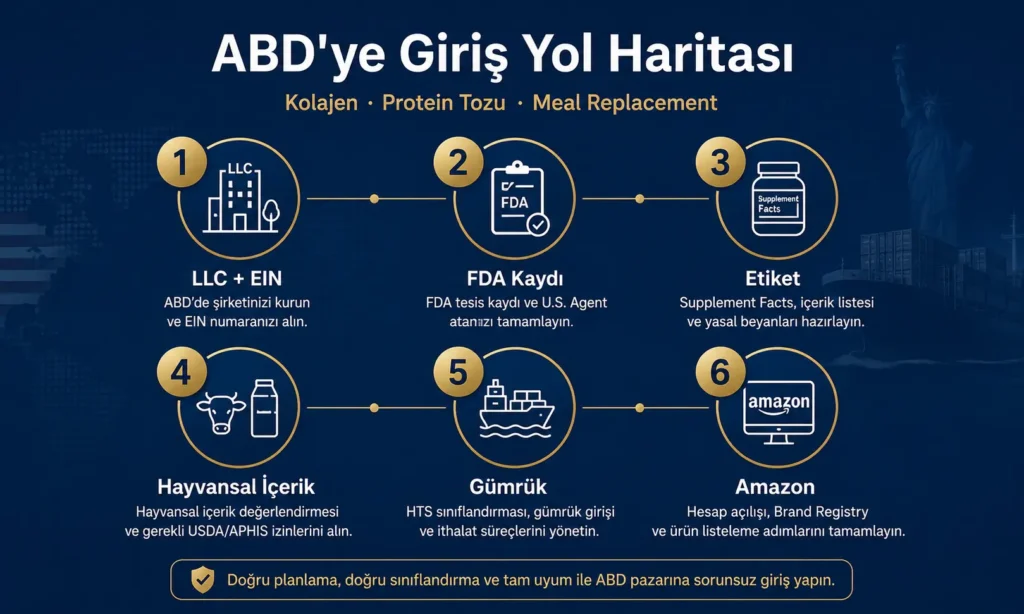
| Aşama | Yapılan İş |
| 1. Şirket ve Vergi | ABD LLC kuruluşu, EIN başvurusu |
| 2. FDA Kaydı | Gıda tesisi kaydı, US Agent ataması, DUNS numarası |
| 3. Etiket ve Formülasyon | Supplement Facts paneli, içerik ve alerjen beyanı, claim analizi |
| 4. Hayvansal İçerik | Kolajen ve süt/yumurta türevlerinde USDA APHIS VS izni değerlendirmesi |
| 5. Gümrük Altyapısı | İthalatçı kaydı, customs bond, prior notice kurgusu |
| 6. Amazon | Gated kategori onayı, listing, FBA sevkiyat, lansman ve PPC |
Bu yapı, regülasyonu ürün lansmanından önce kurmayı hedefliyor. Takviye gibi denetimi yoğun bir kategoride doğru sıralama, hem gümrük hem Amazon hesap tarafındaki riskleri belirgin şekilde azaltıyor.
Sıkça Sorulan Sorular
Kolajen ürünü için FDA onayı gerekiyor mu?
FDA takviye ürünlere tek tek onay vermiyor. Ancak tesis kaydı, US Agent ataması, prior notice, FSVP ve etiket uyumu gibi yükümlülükler zorunlu. Amazon da kendi onay sürecinde bu belgeleri talep ediyor.
Etikette “dietary supplement” yazmak zorunda mıyım?
Zorunlu değil. Ürünün konumlandırmasına ve formülasyonuna göre bu ifadeyi kullanmamak, daha hafif bir uyum rejiminde kalmayı sağlayabiliyor. Karar, formülasyon incelemesi sırasında veriliyor.
Kolajen için USDA izni her durumda gerekiyor mu?
Hayır. Gereklilik, hayvansal türevin kaynağına ve işlenme derecesine göre değişiyor. Bu nedenle içerik tespiti formülasyon incelemesi sırasında yapılıyor ve sonuca göre netleştiriliyor.
Ürünüm henüz tasarım aşamasında, süreci şimdi başlatmak mantıklı mı?
Genelde en verimli zamanlama bu. Ambalaj ve etiket henüz basılmadan yapılan uyum denetimi, sonradan revizyon maliyetini ortadan kaldırıyor ve içerik kararlarının Amazon lansmanına uygun kurgulanmasını sağlıyor.
Etiketim Türkçe olabilir mi?
Hayır. Hem FDA hem Amazon kuralları gereği etiketin İngilizce olması ve tüm zorunlu unsurları içermesi gerekiyor.
Sonuç
Kolajen, protein tozu ve meal replacement ürünleriyle ABD pazarına açılmak, Türk üreticileri için güçlü bir fırsat. Ancak başarı, ürün kalitesinden önce regülasyon mimarisinden geçiyor: LLC ve EIN, FDA tesis kaydı, etiket ve formülasyon denetimi, hayvansal içerik değerlendirmesi, gümrük altyapısı ve Amazon onayı.
Bu adımları doğru sırayla tamamlamak, hem gümrük hem Amazon tarafındaki riskleri azaltıyor ve lansmanı öngörülebilir hâle getiriyor.
ABD pazarına takviye gıda veya başka bir gıda ürünüyle açılmayı planlıyorsanız, FDA kayıt ve belgelendirme · Amerika’ya takviye edici gıda satışı · Amerika’da marka tescili süreçlerinde Export Partners olarak uçtan uca yanınızdayız.
Bu dizideki diğer rehberler
Bu rehber, ABD’ye ihracatta FDA süreçlerini anlatan bir dizinin parçası. Konuya yakın diğer rehberler:
- Amerika’ya supplement ihracatının işleyişi
- Amerika’ya takviye edici gıda satışı
- Abd’ye içecek ihracatında fda kaydı, duns ve etiket
- Kayıt ve belgelendirme tarafında destek için FDA kayıt ve belgelendirme hizmetimize bakabilirsiniz.