
FDA labeling and customs consulting combines the two areas that producers shipping food to the U.S. need most. The United States is one of the countries with the strictest regulations regarding food imports. Especially for Turkish producers planning to export frozen food, the process involves more than just production and logistics; it also includes FDA (Food and Drug Administration) labeling compliance, Food Facility Registration, and U.S. customs procedures are of critical importance.
An improperly prepared label, incomplete FDA registration or incorrect customs declaration can result in products being detained at customs or even rejected altogether. Therefore, it is imperative that producers wishing to export frozen food to the United States fulfill both FDA and CBP (Customs and Border Protection) requirements.
What steps should producers who want to send frozen food from Turkey to the US follow?
The Importance of Label Compliance in FDA Labeling and Customs Consulting
Labels for every food product shipped to the US must be prepared in accordance with FDA rules. Labels not only provide information to the consumer, but are also a key checkpoint for FDA inspections. Nutritional values, allergen declaration and net quantity declaration are the most frequently inspected areas, especially for frozen foods.
The main elements that should be included on labels:
- Nutrition Facts Panel: The US-specific nutritional value format should be used. The table used in Europe and Turkey is different from the US standard.
- List of Ingredients: Ingredients are listed in descending order of quantity. In particular, allergens (e.g. milk, soy, gluten, nuts) should be clearly indicated.
- Net Quantity Declaration: Both metric (grams/kilograms) and American units of measure (ounces/pounds) must be included.
- Manufacturer and Address Information: Must match the FDA registered facility address, use of different addresses may result in product rejection.
- Country of Origin Declaration: "Made in Turkey" is mandatory.
Incomplete or inaccurate information can prevent the product from being listed both in FDA inspections and on online sales platforms such as Amazon.
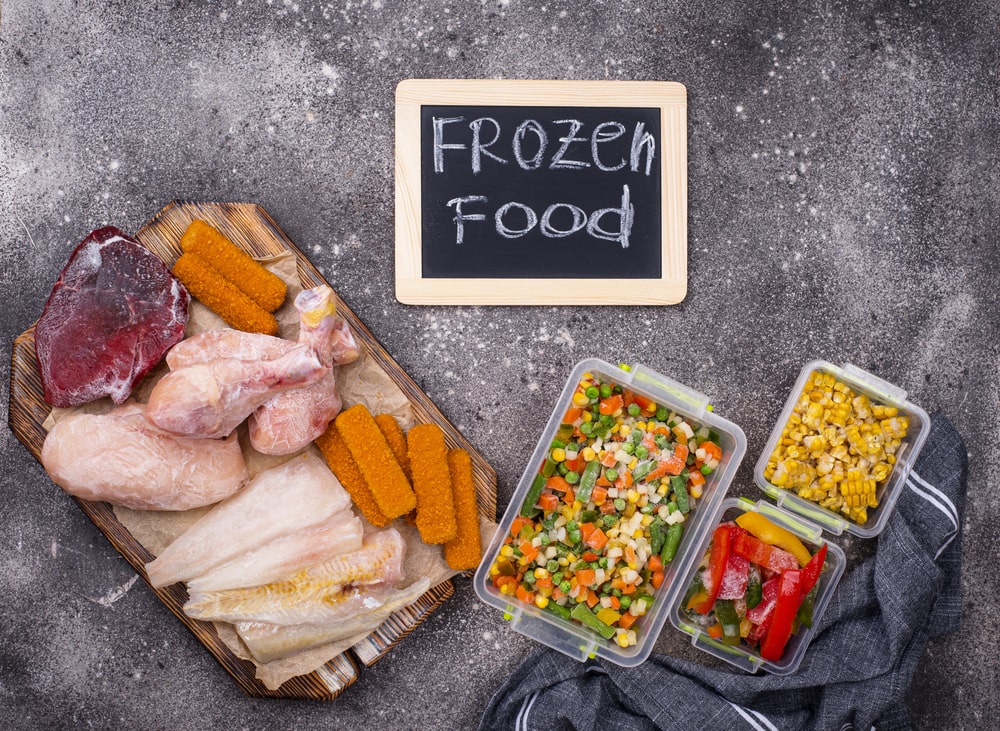
Frozen Food
- FDA Coverage: Frozen foods are also subject to FDA's Food Facility Registration and labeling rules.
- Labeling: Nutrition Facts table, net weight, ingredient list and allergen declaration are mandatory. In addition, storage conditions ("Keep Frozen") must be included on the label.
- Storage and Logistics: The cold chain must be maintained upon entry into the US and during sale. FDA and CBP may also check product temperature during customs inspections.
- Risk Management: Frozen foods are highly regulated, mainly due to microbiological risk (Listeria, Salmonella, etc.).
Example: Frozen pizza, frozen vegetables, frozen vegetables, frozen fish, ice cream → FDA inspection checks both ingredients and storage conditions. Normal Food (Shelf-Stable / Ambient Food)
- FDA Scope: Regular foods are also subject to Food Facility Registration, but without the cold chain requirement.
- Labeling: Nutrition Facts, ingredient list, net quantity and allergen declarations are still mandatory.
- Storage and Logistics: Can be transported and stored at room temperature. No cold chain control at customs.
- Risk Management: More focused on label and ingredient compliance. For example, shelf life, additives, allergen declaration are at the forefront of FDA inspections.
- Example: Chocolate, biscuits, pasta, nuts → FDA mainly checks label compliance and ingredient declaration.
Fundamental Differences Summary
- Frozen food: Cold chain + storage condition mandatory on label.
- Normal food: Can be transported at room temperature, no cold chain requirement.
- FDA Inspection: Microbiological risks (Listeria, Salmonella) are checked more frequently in frozen food.
- Labeling: Frozen food must be labeled "Keep Frozen" and have appropriate storage conditions .
- Logistics: Cold chain certificate and transportation conditions for frozen food can also be presented at customs
This means that both product groups are subject to FDA registration and labeling rules, but for frozen food there is an additional cold chain and storage condition inspection.

Food Facility Registration and U.S. Agent Support
Every production facility that will ship frozen food to the US must obtain FDA Food Facility Registration. This registration must be renewed annually and a U.S. Agent must be appointed in the USA.
We, on behalf of the producers:
- We complete the Food Facility Registration process
- We provide the official representative(U.S. Agent) service in the U.S.
- We follow the process on behalf of the manufacturer in FDA inspections and correspondence
- We check labels and product ingredients for compliance with the FDA system
Registrations without U.S. Agent designation are not considered valid and may be rejected at customs entry.

US Customs Processes
FDA registration alone is not enough. Customs processes carried out by US Customs and Border Protection (CBP) must also be fully complied with.
Our services offered:
- Import consultancy to ensure smooth passage of products through US customs
- Importer customs registration support
- Provision of Customs Bond: Mandatory for companies that will regularly export to the USA
- Correct declaration of taxes and expenses
- Cost control with DDP (Delivery Duty Paid) option for product shipment to Amazon and chain markets
Tax-related update: On August 29, 2025, the tax exemption for shipments valued at less than 800 USD was suspended. With two CBP interim final rules published on June 24, 2026 (Federal Register 2026-12670 and 2026-12669), the suspension became indefinite, and there is no exception for Turkey.
The 15 percent reciprocal tariff in effect at that time is no longer in effect. Executive Order 14389, dated February 20, 2026, repealed the additional ad valorem duties imposed under IEEPA (Federal Register 2026-03832). The rate that is currently certain is the 12.5 percent under Section 301, which is added to the product’s base customs duty (Federal Register 2026-15181). The status of the 10 percent temporary additional duty under Section 122 is unclear; it is advisable to confirm this with your customs broker. In our article on how U.S. customs duties are passed on to Amazon sellers, we provided an example illustrating the order in which the tiers are added and how they are calculated for a single shipment.
Food products, including frozen foods, are not covered by the general exemption; however, there may be product-specific exceptions in supplementary lists, so it’s best to check your own HTS code. This table may increase costs for small shipments.
Opportunities for Turkish Manufacturers
Turkey has a strong position in the US market with its quality and competitive cost advantage in frozen food production. Your products with correct labeling, FDA registration and customs support:
- Amazon FBA warehouses
- Chain grocery stores like Walmart and Target
- Distributors across the Americas
It becomes ready for sale safely over.
In addition, thanks to FDA-compliant and professional labeling, your products pass inspections without any problems, increasing your customers' trust in you.
You may be interested in the following articles on FDA;
FDA Compliant Adhesives and Food Packaging
FDA and VS-16 Authorization Processes for Pet Food Exports to the USA
US-Canada Customs Processes FDA Records, Hazmat Logistics
FDA Process for Food and Cosmetics Sales to the US
Frequently Asked Questions
Is it FDA-certified?
No, we do not. The FDA does not certify products, it only manages the registration and compliance process.
Is FDA registration required for frozen food?
Yes. Every food product entering the US must come from an FDA-registered facility.
What is a Customs Bond?
It is a customs bond that companies that will continuously export to the USA must obtain.
Do I need FDA registration to sell on Amazon?
Yes. Amazon requires FDA registration documents from the seller in the food category.
Is bilingual labels mandatory?
No, only English is sufficient. However, some importers may request an additional label in Spanish.
What happens if a U.S. Agent is not appointed?
Your FDA registration will not be considered valid, and your products will be held at U.S. Customs. We’ve covered the details of this issue in our article “What Happens to Products Held by the FDA at U.S. Customs?”

