
The cost of exporting food to the U.S. isn’t just about freight and customs duties. The items that really throw off the budget are one-time compliance fees and small, recurring charges per shipment. The one-time fees are applied to the first shipment, making that batch appear more expensive than it actually is, while the recurring charges, because they seem small individually, are often not tallied at all.
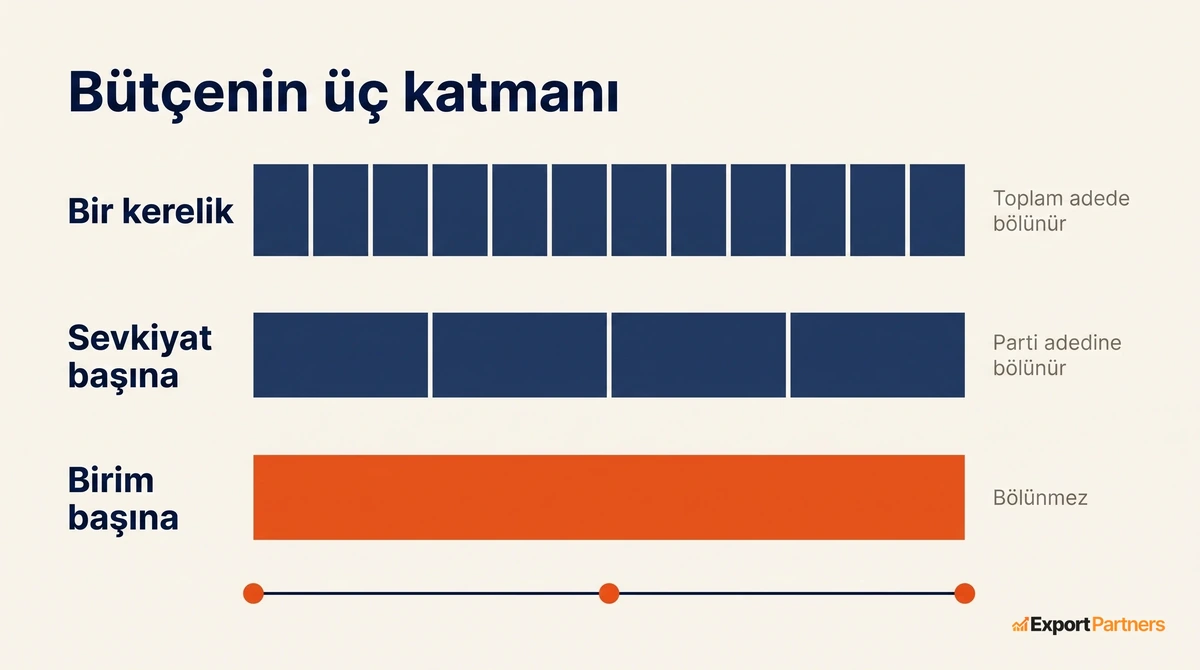
In this guide, we break down the costs into three categories: one-time setup costs, per-shipment expenses, and per-unit costs. You’ll then find a step-by-step overview of the U.S. customs and FDA process from start to finish, followed by the rules that will change in 2026.
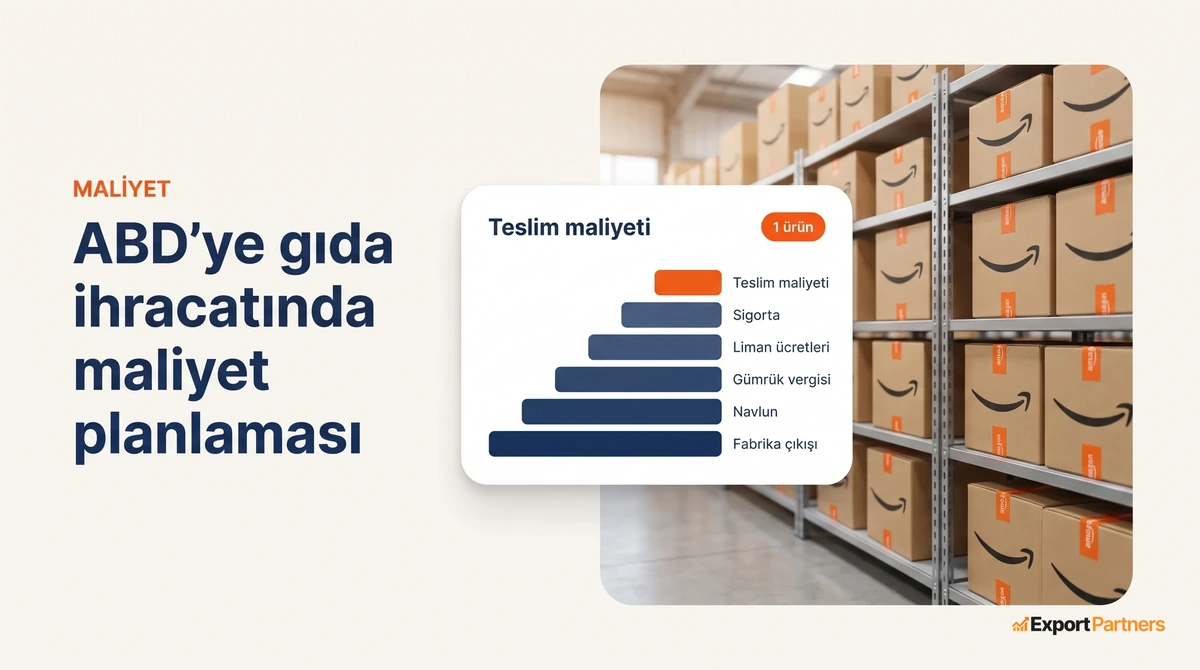
What are the components of the cost of food exports to the U.S.?
The cost of exporting food to the U.S. is the sum of all expenses incurred from the time the product leaves the factory until it reaches the buyer’s warehouse in the U.S. These costs are categorized into four groups: compliance and preparation, logistics, customs, and domestic distribution in the U.S.
| Group | Table of Contents | Recurrence rate |
|---|---|---|
| Adaptation and Preparation | FDA facility registration, U.S. representative, FSVP, label adaptation, laboratory analysis | One-time and annual |
| Logistics | Freight, insurance, domestic transportation, cargo handling | With every shipment |
| Customs | Customs duty, Section 301 surcharge, MPF, HMF, consultant, bond | With every shipment |
| Within the U.S. | Port handling, warehousing, storage, distribution | With every shipment |
What are the one-time setup costs?
These costs are paid before the first shipment and do not recur in subsequent batches. They must be accounted for separately in the budget and divided by the total production quantity; otherwise, the first batch will appear to be unprofitable when it is actually profitable.
- FDA facility registration. The registration itself is free; the cost lies in ensuring the process is carried out correctly and in following up on it. The FDA registers facilities; it does not approve them. Misusing this distinction in contracts and product communications can lead to problems.
- U.S. representative. Required for every food facility located abroad. This is a commercial service; the annual fee varies depending on the provider.
- Label adaptation. Nutrition Facts layout, allergen declaration, net quantity, country of origin, and the requirement for English. Simply translating the Turkish label is not sufficient; the layout must be restructured to conform to the U.S. format.
- Laboratory analysis and certification. Nutritional analysis by product group, shelf-life studies, and FCE and SID documentation for high-acid and low-acid canned foods.
- A continuous customs bond. The annual cost ranges from approximately $700 to $800. A single-shipment bond may seem cheaper, but for more than three shipments, a continuous bond is generally more cost-effective.
For details on labeling and customs requirements, please refer to our article on the FDA’s labeling and customs guidelines; for additional permits required for products containing animal-derived ingredients, please refer to our article on exporting animal-derived foods to the United States.
What are the costs per shipment?
These items are recalculated for each shipment and are directly included in the unit cost. The table below shows the ranges in effect as of mid-2026; since freight rates change weekly, they must be verified at the time of the quote.
| Pencil | the year 2026 | Note |
|---|---|---|
| 40-foot container, by sea | $4,000 to $7,000 | Transit: 25 to 35 days |
| 20-foot container, by sea | $2,500 to $4,500 | Transit: 25 to 35 days |
| Less-than-truckload shipping | $80 to $200 per cubic meter | Transit time: 30 to 40 days |
| Air cargo | $5 to $15 per kilogram | Transit: 5 to 7 days |
| Port tow | $300 to $800 per container | From the port to the warehouse |
| MPF, transaction fee | Approximately 3.5 per thousand of the value | There are upper and lower limits |
| HMF, Port Maintenance Fund | 1.25 per thousand of the value | By sea only |
In addition to these, there are warehouse and chassis fees that apply when the free storage period is exceeded. Since these are not planned expenses, they are generally not included in the budget. Setting aside a small percentage of the shipping budget for this item prevents the plan from falling apart at the first sign of trouble.
How are U.S. customs duties calculated in 2026?
An additional 12.5% Section 301 tariff is being imposed on goods originating in Turkey effective July 24, 2026. The decision was announced by the USTR on the evening of July 23, 2026, and took effect the following day at 12:01 a.m. Eastern Time. The rate is added to the product’s existing MFN tariff.
A common mistake is this: The 12.5% is not added to the previously mentioned 15%; rather, it replaces it. The previous tiers have ended, and the effective rate has changed from 10% to 12.5%.
| Layer | Status |
|---|---|
| IEEPA reciprocal tariff (15%) | It ended on February 24, 2026 |
| Section 122 Global Surtax (10%) | It ended on July 24, 2026 |
| Section 301 (12.5%) | It began on July 24, 2026 |
The decision is not specific to Turkey. The same investigation covers 60 economies; a 10% rate applies to 17 of them, a 12.5% rate to 38, and Turkey is in the second group. The subject of the investigation is the existence and enforcement of a regulation prohibiting the import of goods produced through forced labor—it is not a determination regarding the nature of Turkish production. Explaining this distinction clearly to your U.S. buyer prevents an unnecessary debate from the outset. The rate is not permanent either: if the USTR determines that the relevant country is effectively enforcing the ban, the door remains open for a reduction.
List of Exemptions and Your HTS Code
The tax does not apply to all products. The HTS lines that are exempt are listed in the appendix to the notice published in the Federal Register on July 28, 2026. These lines are grouped under heading 9903.05.87 in the tariff schedule and are tracked via the list published by CBP.
The logic behind the list is as follows: Raw materials that are not grown at all in the U.S. or cannot be produced in sufficient quantities are exempt. Coconut, palm kernel oil, cocoa, and tropical fruit derivatives appear on the list. However, typical food items exported by Turkey to the U.S. are not on the list: nuts and dried fruits such as hazelnuts, dried figs, and dried apricots, as well as olive oil, sunflower oil, pasta, tomato paste, confectionery, and pet food remain subject to the tariff. A 12.5% tariff applies to these items.
How you perform the check is important. The list operates at the eight-digit code level, not at the four-digit heading level. While some subcodes within the same heading may be exempt, others may remain subject to the rules; this is why it is possible for a product made from tropical fruit to be exempt, while a standard product in the same heading remains subject to the rules. Therefore, the check is performed using the exact eight-digit code you will use in your declaration. An approximate match is not sufficient.
Calculation formula: CIF value multiplied by (MFN rate plus 12.5%). The taxable base is the CIF value, not the FOB value; in other words, it includes freight and insurance. For steel, aluminum, and copper items covered under Section 232, this additional duty is not cumulative.
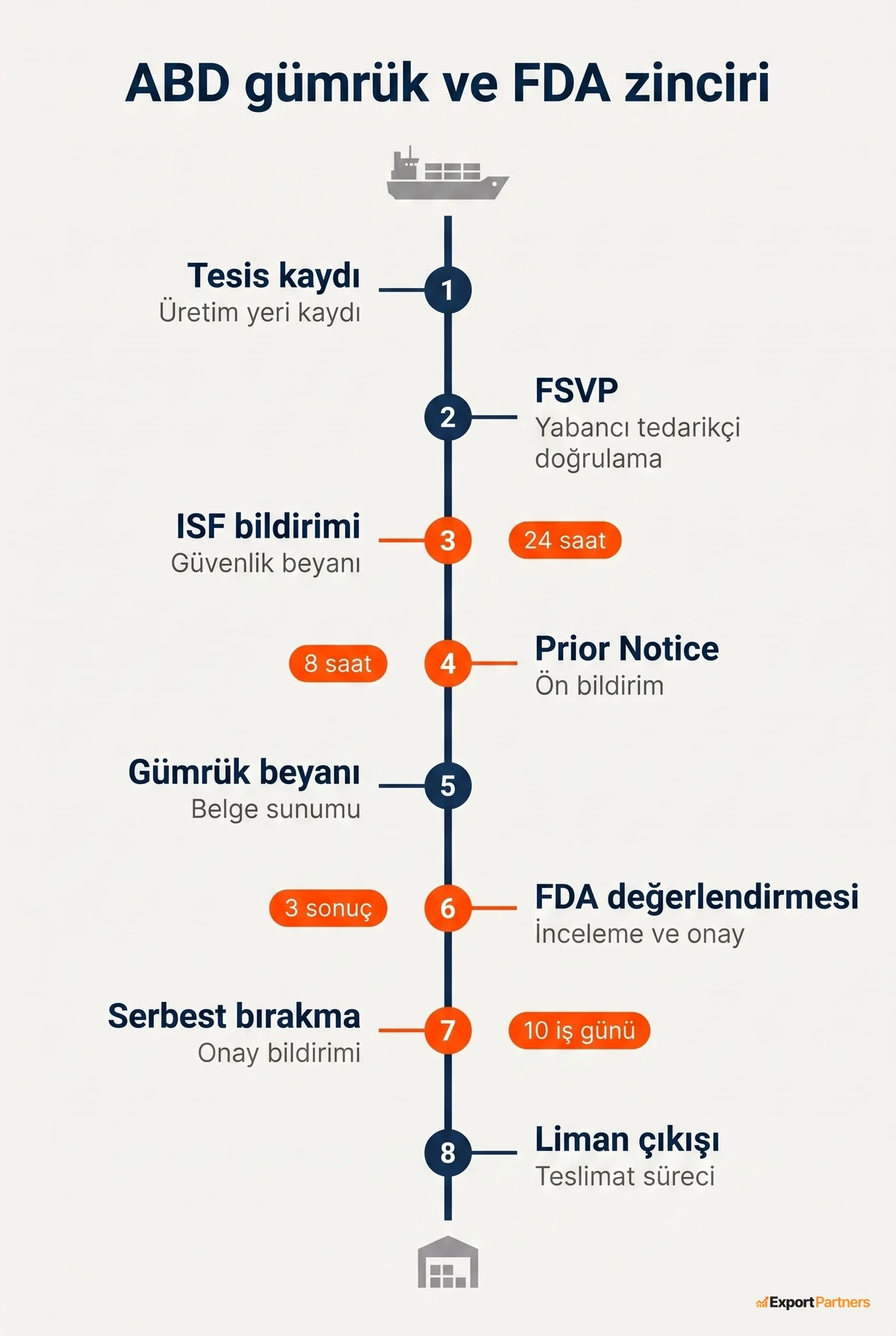
How does the U.S. customs and FDA process work from start to finish?
The following sequence is for a food shipment arriving by sea. Each step has a person in charge and a time window.
- Facility registration and representative. The manufacturing facility must be registered with the FDA and have a valid U.S. representative.
- FSVP implementation. An importer in the U.S. must have a written program that verifies the foreign supplier. The responsibility lies with the importer, but the manufacturer provides the documentation.
- ISF declaration. The importer must submit a security declaration at least 24 hours before the vessel is loaded.
- Prior Notice. Prior notice is provided to the FDA. The standard lead times are 2 hours for road transport, 4 hours for air and rail transport, and 8 hours for maritime transport, and notice may be provided up to 30 days in advance (21 CFR 1.279).
- Customs declaration and bond. The customs broker opens the import declaration. The goods’ HTS code, country of origin, and CIF value are declared here.
- FDA review. The FDA issues one of three determinations: “May Proceed,” a document or label review, or a sample analysis. A label review is the most common and easiest-to-prevent hold.
- CBP release and payment of duties. After release, an entry summary is provided, and duties must be paid within ten business days.
- Port clearance and distribution. The container is picked up and cleared from the port within the allowed time frame.
If you’d like to work with us to manage the customs process, please take a look at our U.S. and Canadian customs services. For detailed information on the steps involved in FDA registration, please visit our FDA registration and certification page.
Three rules changing in 2026
The FDA facility registration renewal period begins on October 1
FDA food facility registrations are renewed in even-numbered years. The 2026 renewal window runs from October 1 to December 31, 2026. Registrations not renewed during this window are considered invalid. It is safer to renew in advance for shipments scheduled for October.
The Prior Notice rule has been updated
The FDA amended the Prior Notice regulation with a final rule dated September 25, 2025. For food arriving via international mail, the name of the postal service and the tracking number must now be reported. In addition, specific time frames have been established for resubmissions following a rejection or hold decision.
The FSMA Section 204 traceability rule has been postponed until 2028
The compliance deadline for products included in the Food Traceability List has been extended from January 20, 2026, to July 20, 2028—a thirty-month delay. The content of the regulation has not changed; only the deadline has been postponed. If your product falls under a category listed on the list, you now have additional time to establish the necessary registration infrastructure.
How do you create a budget?
A simple three-column table meets most needs: one-time, per shipment, and per unit. Setup items are divided by the total planned quantity, and shipment items are divided by the quantity in that batch. This makes the difference in unit cost between the first and third batches visible.
| Column | What goes in | How to divide it |
|---|---|---|
| One-time | FDA registration tracking, label adaptation, analysis, FSVP implementation | Total planned quantity |
| Per shipment | Freight, insurance, consulting, taxes, MPF, HMF, withdrawal | Depending on the number of those parties |
| Per unit | Product cost, packaging, label printing | Directly |
Recurring annual items, such as the U.S. representative and bonds, should be listed on a separate annual row rather than in the one-time column and divided by the total number for that year.
The Three Most Common Budgeting Mistakes
- Allocate setup costs to the first batch. FDA registration, labeling, and analysis fees are not expenses associated with a single batch. If these costs are not divided by the total quantity, the first batch will appear to be at a loss, which could lead to an incorrect pricing decision.
- Do not set aside a reserve for lead time. Warehouse and chassis fees are not planned but do occur. Setting aside a small percentage of the shipping budget is sufficient.
- Calculate the tax based on FOB. Customs duties are levied on the CIF value, meaning that freight and insurance are also included in the taxable base. Calculating based on FOB results in a lower tax amount than it actually is.
Frequently Asked Questions
Is there a fee for FDA registration?
No, the facility registration itself is free. The cost covers ensuring the registration is completed correctly, the services of a U.S. representative, and tracking the biennial renewal. The FDA registers the facility; it does not approve the product.
What happens if my registration isn't renewed by the deadline?
The registration will become invalid, and shipments from that facility may be stopped at the point of entry. Re-registration is possible, but the process takes time. For more details, please see our article on FDA registration cancellation and re-registration.
Who issues the Prior Notice?
The declaration may be filed by the importer, a customs broker, or a party authorized on behalf of the exporter. Responsibility lies with the party filing the declaration; incomplete or incorrect information may result in delays at customs.
Do dietary supplements go through the same process as regular food?
The basic process is the same, but the labeling rules and declaration limits differ. For dietary supplements, ingredient declarations and health claims are evaluated separately. Our article on the sale of collagen and protein powder in this category provides a more detailed overview.
Are there any additional costs for products containing animal-derived ingredients?
Yes. In addition to the FDA, the USDA and APHIS are also involved, and import permits and certifications entail additional time and costs. For a step-by-step guide to the permitting processes for pet food, please refer to our article on exporting pet food to the U.S.
*The amounts in this guide are current as of mid-2026 and are updated periodically. You should verify them based on your product’s HTS code and category.*
Last updated: August 30, 2026
Tek bir ürün üzerinden adım adım bakmak isterseniz, aynı süreci ABD’ye zeytinyağı ihracatı rehberimizde zeytinyağı için sıraladık.

